



Pregnancy involves a series of medical evaluations to ensure the healthy development of the baby. Among advanced prenatal diagnostic procedures, amniocentesis is one of the most important tests used to detect genetic and chromosomal conditions before birth. It provides valuable information about the baby’s health and helps parents and doctors make informed decisions during pregnancy.
Although the word may sound complex, amniocentesis is a well-established and widely performed procedure recommended in specific medical situations.
What is Amniocentesis?
Amniocentesis is a prenatal diagnostic test in which a small amount of amniotic fluid is withdrawn from the sac surrounding the baby in the uterus. This fluid contains fetal cells and important substances that can be analyzed to detect genetic disorders, chromosomal abnormalities, and certain infections.
The test is usually performed between 15 and 20 weeks of pregnancy, though it may sometimes be done later if required.
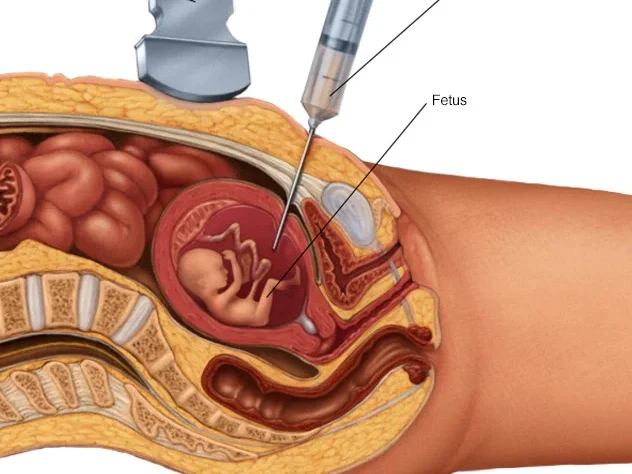

Why is Amniocentesis Performed?
Doctors recommend amniocentesis when there is a higher risk of genetic or chromosomal conditions. It may be advised in the following situations:
- Abnormal results from screening tests
- Advanced maternal age (35 years or older)
- Family history of genetic disorders
- Previous child with chromosomal abnormalities
- Suspicious findings on ultrasound
- Risk of neural tube defects
Preparation for Amniocentesis
In most cases, no special preparation is required. However:
- Inform your doctor about any medications.
- Mention any allergies or bleeding disorders.
- You may be advised to avoid strenuous activities after the test.
When Will Results Be Available?
The amniotic fluid sample is sent to a laboratory for detailed analysis. Results typically take:
- 3–5 days for preliminary results (rapid tests)
- 10–14 days for complete chromosomal analysis


Benefits of Amniocentesis
- Provides accurate diagnostic information
- Helps in early detection of genetic disorders
- Assists in making informed pregnancy decisions
- Allows early medical planning if needed
- Reduces uncertainty after abnormal screening tests